
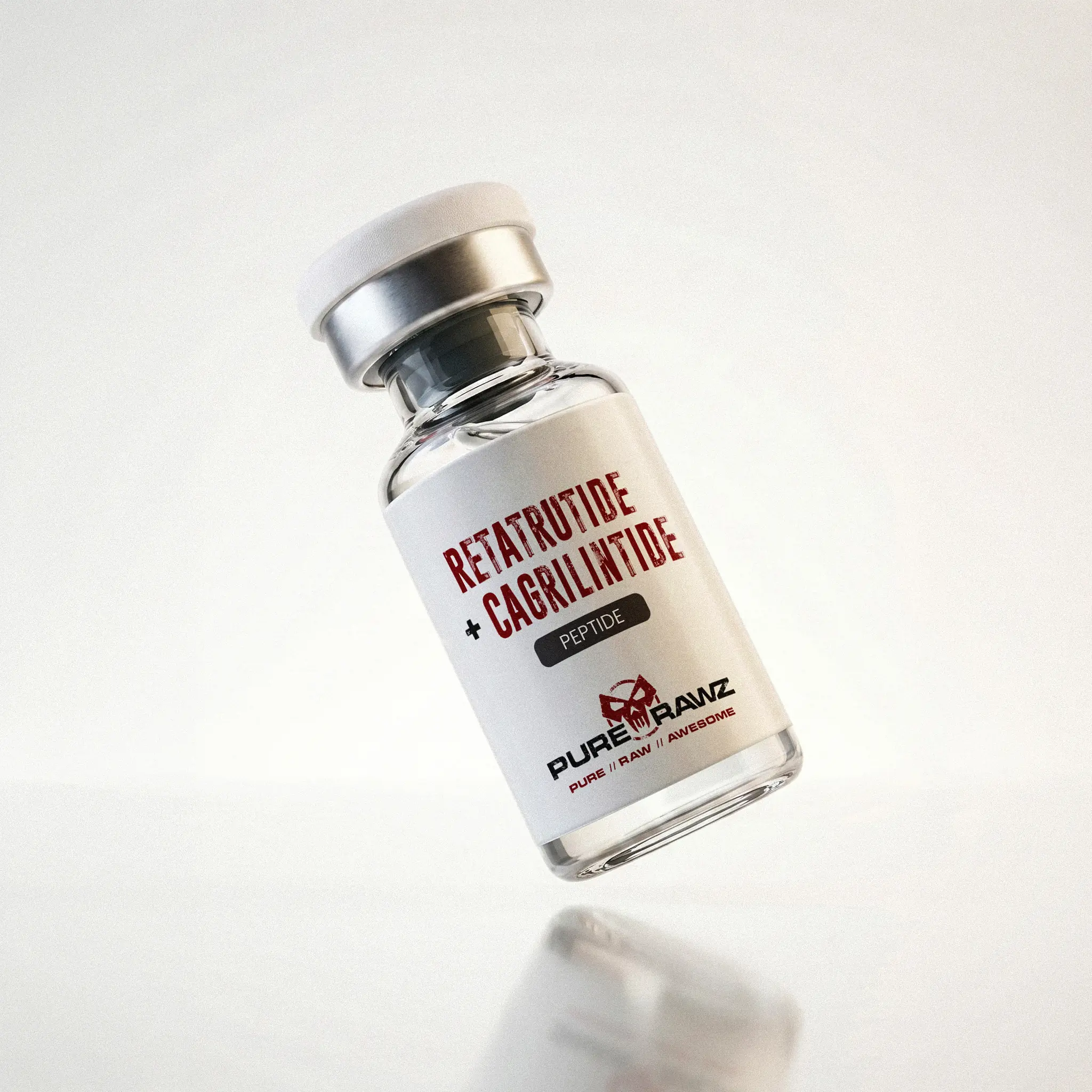
Buy Retatrutide + Cagrilintide Online
Retatrutide + Cagrilintide combines two experimental metabolic peptides with complementary mechanisms. Retatrutide activates GLP-1, GIP and glucagon receptors, while cagrilintide is a long-acting amylin analogue. Together, they are of major interest in research into appetite regulation, body weight, glucose metabolism and metabolic health.
Retatrutide and cagrilintide have each generated substantial clinical interest, although the specific combination is less extensively studied than semaglutide/cagrilintide.
Product Information
Retatrutide is a triple receptor agonist targeting GLP-1, GIP, and glucagon receptors. Cagrilintide works primarily through amylin receptors and influences satiety and gastric emptying.
The rationale for combining them is straightforward: retatrutide targets multiple metabolic hormone pathways while cagrilintide adds a complementary satiety mechanism.
How Does It Work?
Retatrutide activates GLP-1, GIP, and glucagon receptors, while cagrilintide activates amylin-related pathways involved in appetite and energy regulation.
Retatrutide + Cagrilintide Benefits
Strong Weight-Management Research
Retatrutide has produced substantial reductions in body weight in clinical trials, while cagrilintide has independently demonstrated weight-loss activity. Their complementary mechanisms make the combination particularly interesting for obesity research.
Appetite and Satiety Control
Both peptides influence pathways involved in hunger, satiety, and food intake. Cagrilintide provides amylin-mediated appetite regulation, while retatrutide acts through three metabolic hormone receptors.
Glucose and Metabolic Research
Retatrutide has demonstrated improvements in measures of glycemic control and insulin sensitivity in clinical studies. Cagrilintide adds another metabolic signaling pathway, making the combination relevant to research into obesity-associated metabolic dysfunction.
Body-Composition Research
Retatrutide is being studied not simply for scale weight but also for changes in fat mass, lean mass, and overall body composition. This remains an important research question as next-generation obesity therapies develop.
Side Effects
Reported adverse effects are dominated by nausea, vomiting, diarrhea, constipation, reduced appetite, and other gastrointestinal symptoms. These effects are particularly relevant because both compounds influence appetite and gastrointestinal physiology.
Dosage
Clinical trials of retatrutide have investigated doses ranging from 1 mg to 12 mg once weekly, with gradual dose escalation used in later-stage studies. Cagrilintide trials have investigated approximately 0.3–4.5 mg once weekly, depending on the study. These figures should not be interpreted as an established dose for the combined product.
Research References
Jastreboff AM, et al. Triple-Hormone-Receptor Agonist Retatrutide for Obesity — A Phase 2 Trial. N Engl J Med. 2023;389:514-526.
PubMed — Retatrutide Phase 2 Trial
Lau DCW, et al. Efficacy and safety of cagrilintide in people with overweight or obesity.
PubMed — Cagrilintide Research
Purerawz Disclaimer
Purerawz does not sell, manufacture, stock, dispense, or directly supply any of the products discussed on this website. Purerawz is an independent information and affiliate platform. Where available, links may direct readers to independent third-party providers, and Purerawz may receive a commission from qualifying purchases at no additional cost to the reader.
The information provided is for educational and informational purposes only. Dosage figures may reflect published research protocols, historical clinical use, or reported community practices and should not be interpreted as personalized medical instructions. Research findings—particularly those from animal, cellular, or small early-stage studies—do not establish that a product is safe or effective for every individual or condition.